

Automotive seat-cover production
Leather Perforation Machines for Automotive Seat Covers
Choose a digital or mould punching workflow for your seat-cover material, pattern and production plan.
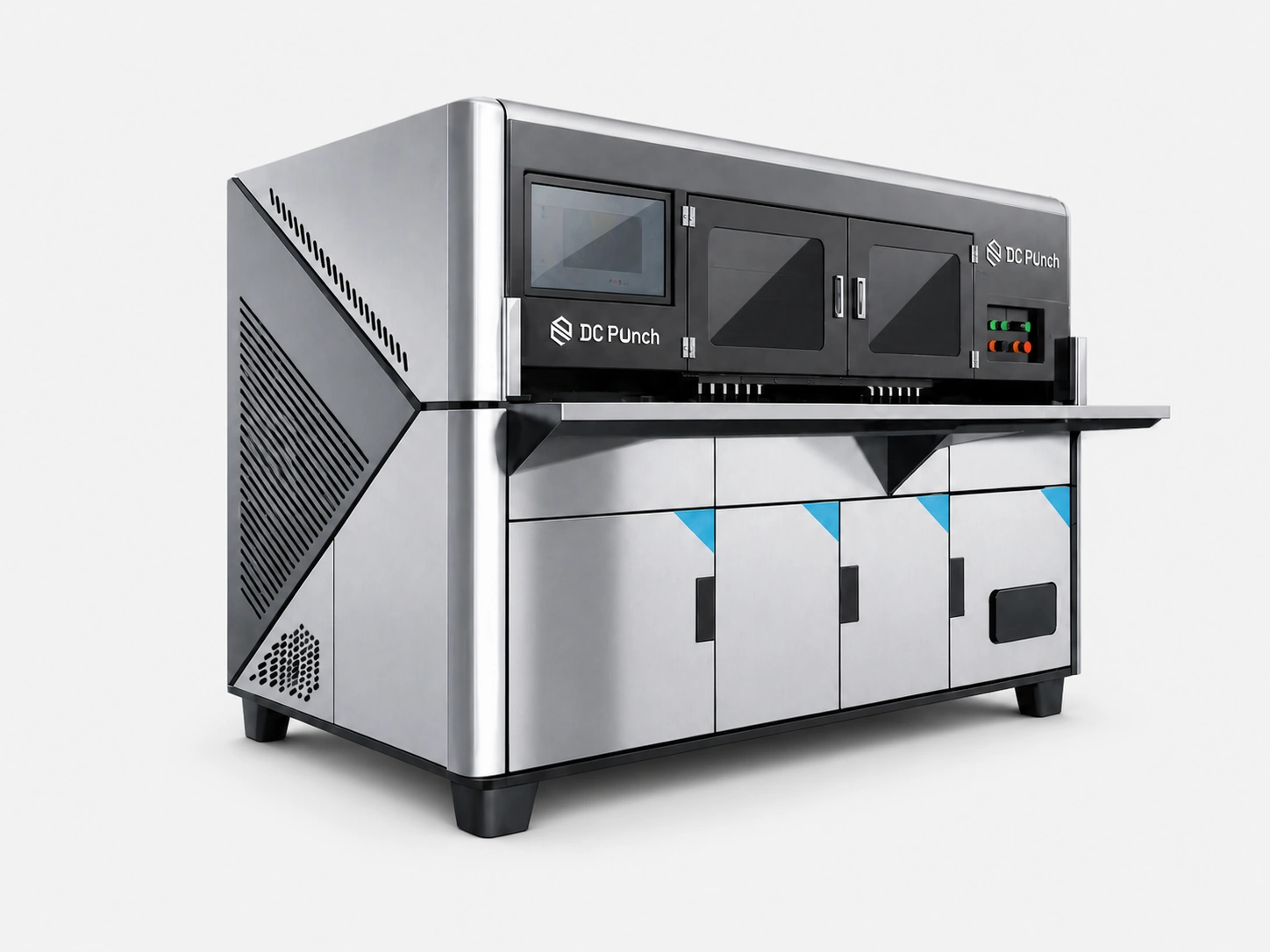
Choose a perforation process around your seat-cover material, pattern and production workflow. DC-PUNCH supplies digital, mould and roll-fed leather punching machines for manufacturers evaluating perforated seat cushions, backrests, headrests and other automotive upholstery components.
Share your material and drawing to discuss a suitable configuration. Machine selection should follow sample validation: a published machine specification alone does not establish the quality or output achievable on your finished seat-cover component.
Define the seat-cover result before selecting a machine
Decorative perforation and holes intended for a ventilated seat can require different acceptance criteria. Establish the hole shape, diameter, pitch, open area and pattern position on the finished panel. Mark sewing margins, unperforated borders and registration points so the perforation does not extend into restricted areas.
Agree on how the visible surface and reverse side will be inspected. A representative trial should assess hole edges, incomplete punches, retained waste, pattern alignment and appearance across the panel. Where perforation forms part of a ventilated seat, the seat-system supplier should validate the complete upholstery, backing and ventilation assembly against the project requirements.
Validate the exact leather or synthetic material
Send the actual production material, including its backing or laminate. Genuine leather, PU-coated upholstery, PVC upholstery and other flexible materials can require different punching setups. Identify the material supplier, nominal thickness, thickness variation, coating, backing, stretch direction and finished-surface requirements.
Confirm whether punching occurs before or after lamination and whether the trial must include multiple material batches. For genuine leather, define how usable areas and natural variations are handled. For backed synthetic upholstery, inspect both layers after punching. Compatibility should be confirmed on the submitted construction; approval of one material does not automatically cover another finish, thickness or backing.
Match the machine to cut panels or roll material
For pre-cut seat-cover panels, provide the largest part dimensions, orientation, locating points and loading method. Check the working area against the entire fixture and pattern, including margins. Record how an operator positions, removes and checks the part during the trial.
For roll material, provide the roll width, usable punching width, roll dimensions and downstream cutting plan. Discuss feeding, tension, pattern registration and collection requirements. The DC-JL1600 roll-fed leather punching machine is a candidate for evaluating continuous flexible material workflows, subject to material and pattern approval.
Compare digital punching and mould punching
Shortlist the process using your pattern mix, order quantities and changeover requirements. Compare complete production trials under the same acceptance criteria, rather than comparing headline punching rates alone.
| Purchasing requirement | Starting point for evaluation | What to verify |
|---|---|---|
| Frequent pattern revisions or varied seat-cover parts | Digital CNC punching | Drawing import, available punch tools, locating method and changeover steps |
| Repeated patterns with a defined production run | Mould punching | Die layout, tooling cost, trial quality and the procedure for changing patterns |
| Material supplied and processed in rolls | A roll-fed configuration | Usable width, feeding, registration and integration with later cutting |
Roll feeding describes material handling, not a separate tooling principle. The DC-JL1600 combines roll feeding with modular die tooling.
Include loading, unloading, inspection, pattern changes and planned maintenance when evaluating output. Punches per minute and finished panels per hour describe different measurements. Ask for the assumptions behind any production estimate for your drawing and material.
Build a shortlist from the DC-PUNCH range
- DC-A1500-2 digital leather punching machine: review for CNC pattern work and a dual-station panel workflow. Confirm the tool configuration, fixture and material trial.
- DC-6595-2-500PT dual-station mould punching machine: assess for repeated patterns where a dedicated mould process fits the production plan.
- DC-6595-1-500PT full-plate mould punching machine: compare loading arrangements, available floor space and the intended production schedule.
- DC-JL1600 roll-fed leather punching machine: evaluate when the incoming material and downstream process support roll feeding.
These are starting points for engineering review, not an automatic fit for every automotive material. Browse all punching machines and use the leather perforating machine selection guide to compare purchasing criteria.
Agree on sample acceptance before placing an order
Use a representative drawing and production material for the trial. Specify measurement locations, dimensional tolerances and visual acceptance criteria in advance. Review both the pattern and the material after processing, including panel distortion, surface marking and waste removal.
Document the machine configuration, tooling, material details and operating conditions used to produce the accepted sample. Where project-specific automotive tests are required, identify who performs them and what evidence is needed. Keep the approved sample and trial record as references for the purchasing specification.
Request a configuration for your seat-cover project
Send the following information through the DC-PUNCH enquiry page:
- Material type, supplier, thickness range, backing and sample availability.
- Panel drawing or roll width, hole pattern, pitch and required tolerances.
- Expected order quantities, pattern changes and target finished output.
- Current loading, cutting, sewing and inspection workflow.
- Installation country, factory utilities, available floor space and project schedule.
- Required acceptance checks, documentation, tooling and spare parts.
Our team can review the brief with you and identify the machine, tooling and sample checks to discuss in a quotation. Include your current production constraint so the proposal addresses the process you need to improve.