

Are you losing money on high mold costs or rejecting orders because your production is too slow? Choosing the wrong equipment for your leather business can hurt your efficiency and your profit margins significantly.
Leather perforation equipment removes material to create a hole pattern. Common approaches include laser processing, full-plate or movable-die punching, and CNC digital punching. Compare material construction, tooling, pattern requirements, handling and order mix when selecting a process.

I have seen many factory owners struggle with this decision. They often buy expensive machines that do not fit their daily needs. This leads to wasted materials and lost time. In this article, I will explain the differences simply. I want to help you avoid these mistakes. Let us look at the basics first so you can understand the technology.
What is a Leather Punching Machine and How Does It Work?
Do you know exactly how these machines affect your material quality? Detailed knowledge is missing in many factories, and this often leads to damaged leather and high waste rates.
A leather punching machine perforates materials to create breathable patterns or decorative designs. These machines apply force or heat to remove small sections of material. They are essential for manufacturing shoes, automotive interiors, and fashion accessories where ventilation and aesthetics are key.
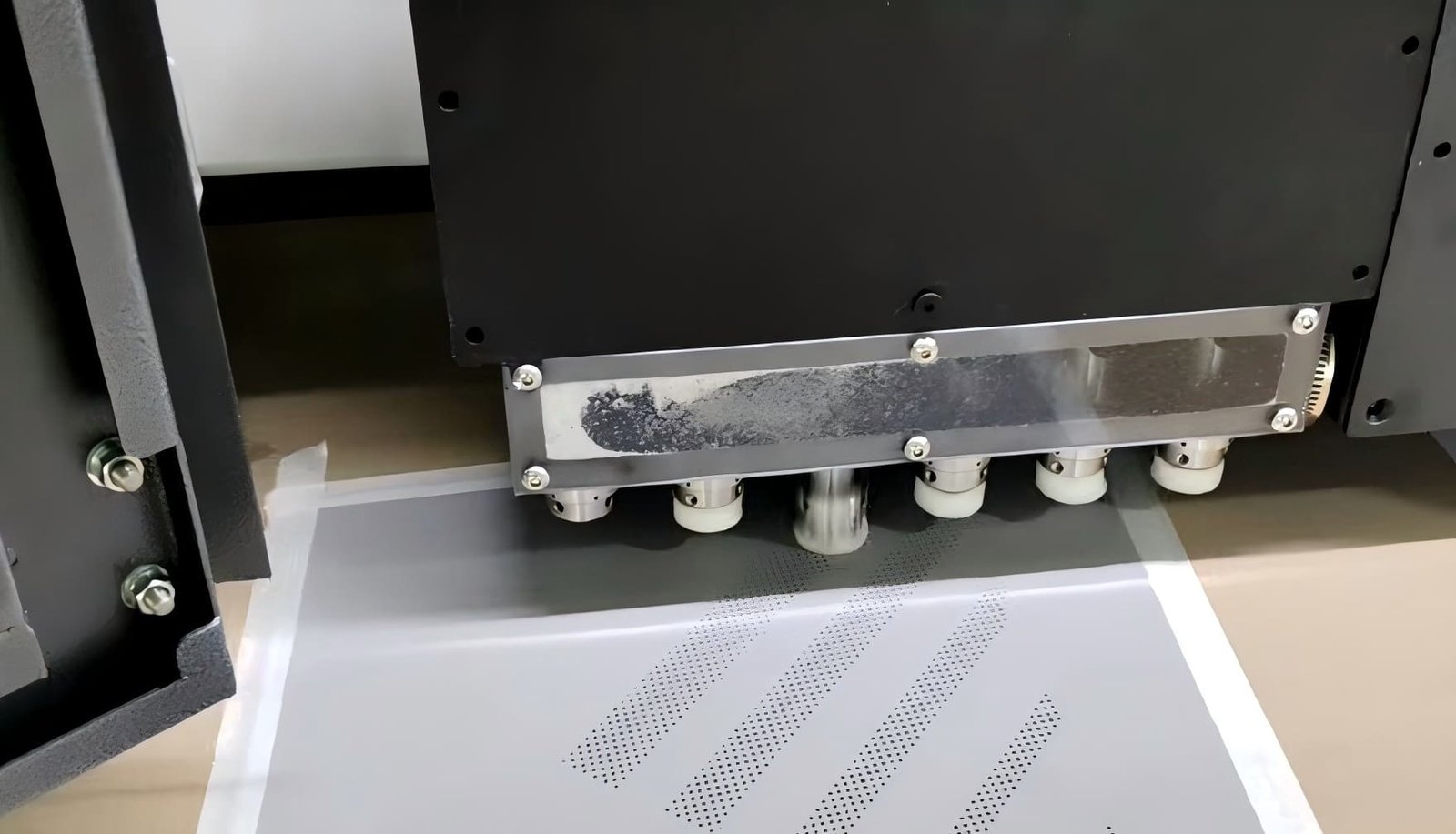
For car-seat covers, footwear and other applications, define the hole dimensions, spacing, pattern position and appearance criteria before choosing equipment. Check material strength and the downstream process with representative samples. Ventilation performance, where required, must be evaluated for the complete product construction.
Core Functions and Principles
The processing sequence depends on the technology. CNC digital equipment follows programmed punching positions; full-plate die equipment presses a pattern through the material in a cycle; movable-die and modular systems use their own tooling and motion sequence. Cycle time depends on the machine, pattern, tooling and material.
Application Areas
You will find these machines in many industries. I have listed the most common ones below:
| Industry | Purpose | Key Requirement |
|---|---|---|
| Automotive | Car seat covers | Precision for airflow and durability |
| Footwear | Shoe uppers | Breathability and complex patterns |
| Fashion | Bags and belts | Decoration and unique textures |
| Furniture | Sofas and chairs | Ventilation and visual style |
Understanding these principles is the first step. You need to know what you are making. Then you can choose the method. Next, we will look at the specific types of machines available to you.
What Are the Differences Between Laser, CNC, and Mould Punching Machines?
Are you overwhelmed by the technical specifications of different brands? Buying the wrong type changes your entire workflow and costs you money every single day.
Three common approaches are laser perforation, die-type punching and CNC digital punching. Laser uses thermal processing. Full-plate die machines can punch a repeated pattern in one press cycle, while movable-die systems use a different tooling arrangement. CNC digital machines position one or more punching tools according to a program; the number of heads or needles depends on the model.

I have worked with all three types. Each one has a specific "personality." You need to understand how they physically interact with the leather.
1. Laser Punching Machines
A laser perforation machine uses a focused beam for thermal material removal. Pattern feasibility and edge appearance depend on the material, laser configuration and settings. Evaluate discoloration, residue, odor and other acceptance criteria on a representative sample.
2. Mould Punching Machines
A full-plate mould punching machine presses a die carrying a repeated hole pattern into the material. A pattern change may require a different or modified die. Other die-type machines use movable or modular tooling, so changeover requirements depend on the machine and pattern rather than a universal rule that every new design requires a new plate.
3. CNC (Digital) Punching Machines
A CNC digital punching machine follows programmed positions using compatible mechanical punching tools. Depending on the model, it may use multiple needles or rotary tooling. Some pattern changes can be made in software without a new full-pattern die, but suitable punches, fixtures, consumables, setup and a trial sample are still required.
| Feature | Laser | Mould | CNC (Digital) |
|---|---|---|---|
| Tool | Laser beam | Fixed, movable or modular die tooling | Compatible mechanical punches |
| Setup | Program, material setup and process checks | Die configuration, material location and sample checks | Program, compatible punches, fixtures and sample checks |
| Edge quality | Check by material and process trial | Check by material and tooling trial | Check by material and tooling trial |
| Pattern changes | Check the program and process settings | Depends on fixed, movable or modular tooling | Check the program, punch compatibility and setup |
This comparison shows that the technology is different. But how do you choose? We need to look at the pros and cons for your specific business model.
Which Technology Has the Best Pros and Cons for Your Business?
Do you worry about investing in a machine that becomes obsolete? Hidden costs like mold fees or maintenance can destroy your profit margins unexpectedly.
For repeated designs, compare full-plate die production with CNC digital punching using an actual material and pattern trial. CNC may reduce dependence on a dedicated die when designs change, but the financial choice depends on tooling, setup, finished-part cycle time, material utilization and order volume.

I want to share a specific strategy with you. I have analyzed many factories. The "best" machine does not exist. The "right" machine depends on your orders.
The Volume Rule: When to Choose Moulds
Large repeat orders can spread dedicated-die costs across more parts. Evaluate a mould machine using the approved pattern, loading process and finished-part cycle time. For a design change, confirm whether the existing die can be reused or modified, or whether replacement tooling is needed.
The Flexibility Rule: When to Choose CNC
For varied orders and customization, a DC-PUNCH CNC machine may reduce the need for dedicated full-pattern dies. Compare programming, punch changes, setup and sample checks when planning shorter runs. Savings depend on the actual designs and production conditions.
The "China Factory" Strategy
A factory may combine mould and digital CNC machines when its order mix includes both repeat patterns and changing designs. The number of each machine should follow measured cycle times, available shifts, changeover needs and capacity planning; a fixed one-to-four ratio is not a universal recommendation.
Why do they do this?
- The mould equipment can be evaluated for repeat patterns and the measured production requirement.
- The CNC machines handle custom orders where their tooling and pattern flexibility are suitable. They handle the overflow. They handle the samples.
A mixed setup can provide different processing options, but it should be justified by the factory's actual order mix and production trials.
Conclusion
Compare mould machines for repeat designs and CNC machines for changing patterns. Include tooling, setup, sample acceptance and finished-part output in the decision; a mixed production line is one option when the order mix supports it.
Plan a trial for your own material
Compare the machine configuration and record sample results before selecting equipment.
Leave a Reply